








Beyond basic business consulting services
At Cogent Analytics, we don’t just plug holes or hand you a binder like most consultants. We implement comprehensive systems across every aspect of your business that deliver measurable results and give you your life back. While consultants write reports, we deliver results, turning your barriers into breakthroughs.
How does our process work?
We earn your partnership every week through a working agreement, not a contract. Implement changes yourself after Discovery, or partner with us for maximum impact.
Let's talkConsultation
60-90 minutes
A free expert assessment for your business health and potential
Discovery
2-3 days
A deep analysis revealing where you're losing time, money, and opportunity
Project
1-3 months
The action phase — we build and implement new systems with you
Lifecycle
2-9 months
The reinforcement phase — we stay engaged until improvements hold
Re-Discovery
2-3 days
A full review confirming results, ROI, and next-stage growth
A new kind of business consulting that turns pain points into performance
The blueprint for a business that works for you
Profit Platform®
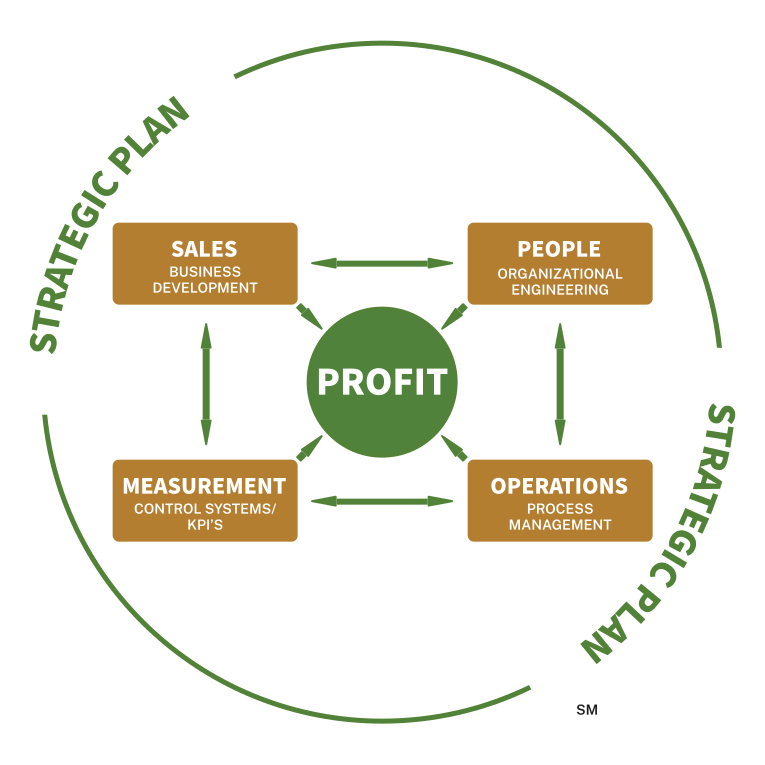
A systematic approach in business consulting across five critical business areas
Strategic planning connects your business goals with what you actually want from life. Our systematic approach ensures every business decision moves you toward personal freedom.
- Strategic planningHolistic plan that aligns business goals with personal vision
- Sales excellenceBusiness development systems that create predictable revenue without constant oversight
- People and leadershipWorkforce development that improves team function without micromanagement
- Operational efficiencyOptimized systems that run smoothly while you focus on strategy
- Measurement and analyticsReal-time visibility and control over business performance
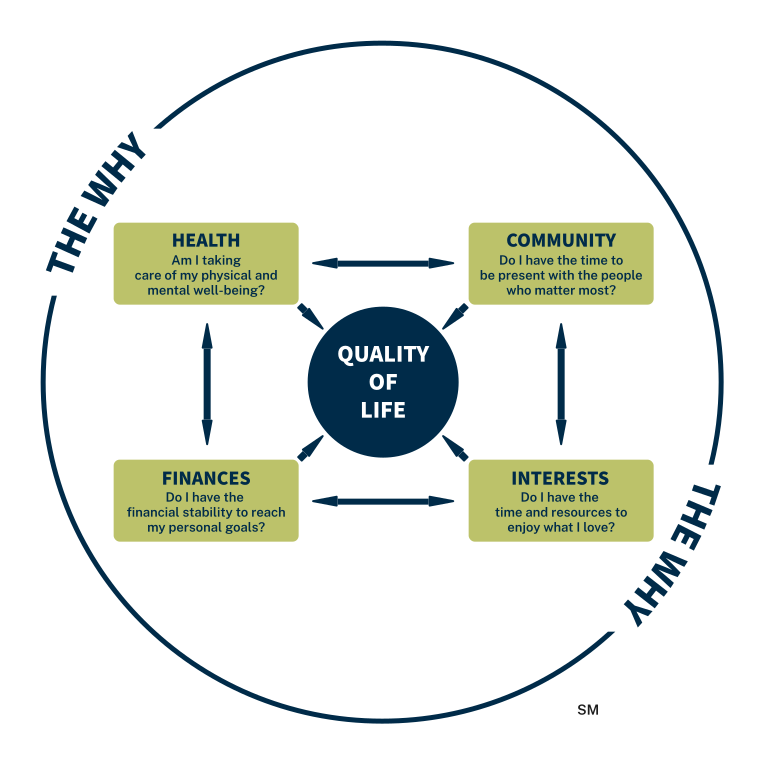
Portrait of Life
Align business success with personal fulfillment
Most business advice ignores what you actually want from life. We ensure every business decision moves you closer to personal goals—more time with family, financial security, or preparing for a successful exit.
Let's talk
Discovery
More than business consulting: Our comprehensive business diagnosis reveals exactly where you're losing time and money
Most business owners are surprised by what Discovery reveals. We'll diagnose your business across all five pillars, identify your biggest profit opportunities, and show you exactly what's possible.
Let's talk


Cogent Assurance
Reliable ROI backed by weekly reviews and monthly validation
Stop wondering if your investment is working. We track every dollar spent and every improvement implemented, delivering measurable returns that show in your bank account, not just on paper.
- Weekly progress reviewsEnsure implementation stays on track and problems get solved fast
- Monthly financial validationMeasures actual ROI impact, not theoretical improvements
- Quarterly business optimizationIdentifies new opportunities and maximizes ongoing performance
- No contracts, everWe use a working agreement, never a contract. If you don't feel value, you can walk away at any time.
From business owners who’ve been where you are
During the Discovery, a full financial review was conducted that opened our eyes to several areas where we were leaving margin on the table.
The clarity, strategic insights, and process improvements that Cogent delivered have proven to be invaluable.
We can now truly see where our greatest profit centers are and concentrate more on those sales opportunities.
Real numbers from real engagements
Based on analysis of 500+ client engagements, 2019-2024
0%+
ROI after 1 year engagement
0+
Businesses transformed
0 hrs
Average weekly workload reduction